
For Immediate Release
Chicago, IL – October 8, 2026 – Zacks Equity Research shares Chevron CVX as the Bull of the Day and Southwest Airlines LUV as the Bear of the Day. In addition, Zacks Equity Research provides analysis on Berkshire Hathaway’s BRK.B, Chubb Limited CB and The Travelers Companies TRV
Here is a synopsis of all five stocks:
Bull of the Day:
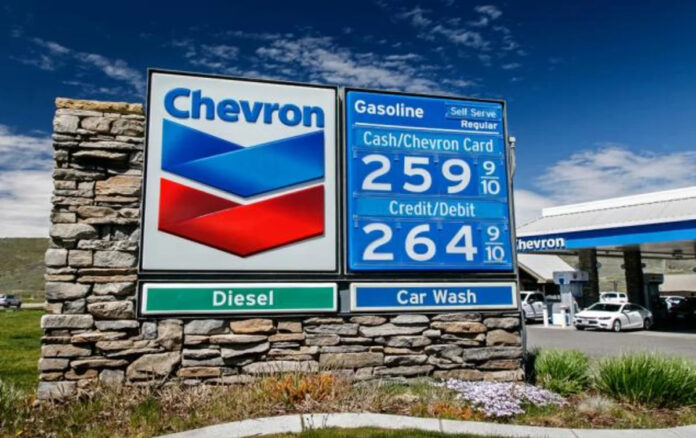
Chevron is a Zacks Rank #1 (Strong Buy) and is one of the world’s largest integrated energy companies, with operations that run from the wellhead to the gas pump.
Its upstream business explores for and produces crude oil and natural gas across the Permian Basin, Kazakhstan, Australia, the Gulf of America, Guyana (through the Hess acquisition) and Venezuela. Its downstream arm refines, markets and transports fuels, lubricants and chemicals.
With crude prices climbing sharply and the integrated majors throwing off record cash, this is a name built for the moment.
About CVX
Chevron carries a market cap of roughly $410 billion, has a Forward PE of 21 and pays a dividend of 3.4%. The company sits in the Oil and Gas – Integrated – International industry, which ranks in the Top 17% of all Zacks industries.
The stock carries Zacks Style Scores of “B” in Value, and “A” in Growth and Momentum.
A Blowout Second Quarter
Chevron reported Q2 adjusted earnings of $6.06 back on July 31, beating the consensus estimate of $5.80. Revenue came in at $70.1 billion, crushing expectations of $57.5 billion by more than 20%.
Net oil-equivalent output hit 4.07 million barrels per day, up from 3.40 million a year ago and 3.86 million in the prior quarter. That nearly 20% year-over-year jump reflects a full contribution from Hess along with record U.S. upstream production.
Both sides of the business are on fire, with upstream earnings soaring to $8.18 billion from $2.73 billion a year ago, while downstream earnings rocketed to $4.87 billion from just $737 million. These numbers were helped by record crude throughput at U.S. refineries.
Cash Is King
Operating cash flow reached $22.6 billion, well ahead of the $19.7 billion analysts expected and nearly triple the $8.6 billion posted a year earlier. Adjusted free cash flow came in at $15.4 billion versus $4.9 billion a year ago.
That cash is strengthening the balance sheet, with the net debt ratio falling to 13.1% from 17.9% in the prior quarter.
Management told the Barclays conference in September that near-term excess cash is going toward paying down debt after oil moved roughly $35 in a single month, with more shareholder returns to follow once the price outlook settles.
The company still guided to $2.5 billion to $3.0 billion in Q3 buybacks.
CVX trimmed its full-year capex outlook to the low end of its $18 billion to $19 billion range. It also hit its $3 billion structural cost reduction target six months early and captured $1.5 billion in annual Hess synergies within a year of closing.
A New Growth Leg in Venezuela
In September, Chevron agreed to updated joint venture terms in Venezuela and plans to invest more than $7 billion over five years. The goal is to more than double production to about 600,000 barrels per day by 2031, with total costs below $20 per barrel and no major new infrastructure required.
Elsewhere, Permian capex intensity is guided down 25% this year while production holds near 1 million barrels per day. The company also signed a 20-year deal to power a Microsoft data center in West Texas, giving the stock a sneaky AI angle.
Estimates Are Soaring
Analysts have been racing to catch up. Over the last 60 days, seven estimates for the current year have moved higher with none moving lower.
The current-year consensus has climbed from $14.43 to $17.47 over the past 90 days, a jump of about 21%. That figure would represent growth of roughly 140% over last year’s $7.29. Next year’s estimate has risen from $13.04 to $15.11 over the same stretch.
The near term looks even better. The Q3 consensus has moved from $3.89 to $4.89 in 90 days, while the Q4 estimate has surged from $3.54 to $5.05, a gain of more than 40%.
The company reports Q3 results before the bell on October 30.
Getting Paid to Wait
The stock pays an annual dividend of $7.12, good for a 3.4% yield. The company has raised its payout for decades, and with free cash flow running at today’s levels, coverage looks comfortable.
The valuation remains reasonable too with shares trade at less than 12 times forward earnings. A beta of just 0.53 adds a defensive quality that is hard to find alongside this kind of earnings momentum.
The Technical Take
Shares ran from the low $170s in July to a 52-week high near $218 in September before pulling back to the $203 area. The stock has since stabilized and is consolidating around $205, holding well above its 200-day MA of $187.
A move back through the $210 level would put the September high in play.
Wells Fargo has a $230 price target, while Morgan Stanley sits at $218.
In Summary
CVX checks every box for an energy bull: higher oil prices, record production, surging cash flow, rising estimates and a growing dividend. CEO Mike Wirth said this week he expects oil and gas demand to keep growing after the Iran war and that the last big basin has not yet been found.
Investors looking for income, value and momentum in one package should take a close look at this Zacks Rank #1 (Strong Buy) heading into earnings.
Bear of the Day:
Southwest Airlines is one of the largest domestic carriers in the United States, operating a fleet of more than 800 Boeing 737 aircraft. The company has spent the past year overhauling its business model, adding assigned seating, extra-legroom seats, bag fees and premium products to boost revenue.
The stock currently holds a Zacks Rank #5 (Strong Sell). It sits in the Transportation – Airline industry, which ranks in the Bottom 5% of all Zacks industries.
Fuel Is a Problem
The same surge in energy prices that is lifting oil producers is a major headwind for the airlines. Fuel is one of the largest costs for any carrier, and Southwest absorbed nearly $900 million in additional fuel expense year over year in the second quarter alone.
The company’s Q3 guidance assumed jet fuel of $3.70 to $3.75 per gallon, based on the forward curve as of July 17. Oil has moved sharply higher since then, which puts those assumptions at risk and should be a major concern.
Management says higher fuel can be largely recovered through fares, but with a lag. Southwest books only about 60 days out, so when fuel prices spike quickly, ticket prices struggle to keep pace.
That gap lands directly on the bottom line.
Guidance Took a Step Back
LUV reported Q2 adjusted earnings of $0.94 per share on July 22, beating the $0.52 consensus. However, revenue of $8.43 billion missed expectations of $8.58 billion.
The company guided Q3 earnings to $0.50 to $0.75 per share, below the $0.77 consensus at the time. It also widened full-year EPS guidance to a range of $3.25 to $4.25, down from its prior call of more than $4.00.
Southwest has been forced to pull back on growth. Capacity growth for 2026 has been cut roughly in half from the original plan of 2% to 3%, and management said it could trim further if fuel stays elevated. Unit costs excluding fuel are also expected to rise 3.5% to 4.0% in Q3.
Estimates Are Falling
Analysts have been cutting numbers. Over the last 60 days, four estimates for the current year have moved lower with none moving higher.
The current-year consensus has dropped from $3.4
Source: finance.yahoo.com — article syndicated from the publisher’s feed; all rights remain with the original publisher.

