
On Oct. 5, the U.S. Department of Energy’s Office of Energy Dominance Financing announced a conditional loan commitment of up to $4.2 billion to Vistra (VST -3.11%) to add power capacity to its massive portfolio without constructing new power plants or reactors.
The loan commitment comes as hyperscalers seek reliable electricity with utility operators scrambling to add capacity. Vistra is in an enviable position with a massive power-generation fleet, and the loan will help the company build on its strong market position.
Vistra stock has drawn attention from investors looking to capitalize on the AI electricity demand boom, but it has also faced significant volatility. With its stock down 23% over the past year, is it time to buy the energy stock?
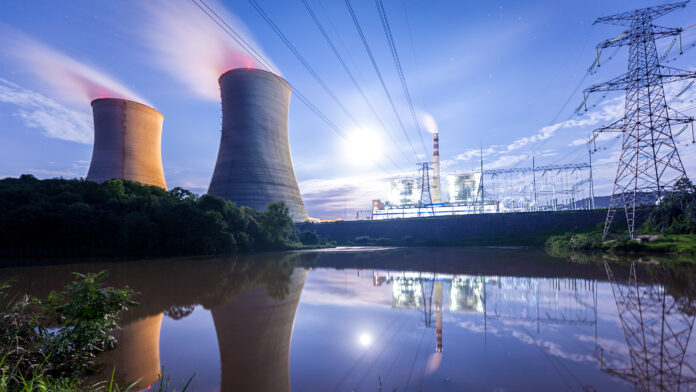
Image source: Getty Images.
Here’s what Vistra plans to do with its $4 billion loan
DOE funding for Vistra will help finance nuclear uprates and modernization across its massive energy fleet, focusing on three plants in the PJM Interconnection region: Beaver Valley in Pennsylvania, and Davis-Besse and Perry in Ohio.
The investment will help these reactors operate another 20 years beyond their existing licenses, add 433 megawatts of clean baseload capacity without building new reactors or new transmission corridors, and preserve nearly 4 gigawatts of existing generation that serves more than 3 million homes.
In PJM Interconnection, which serves 13 states and the District of Columbia in the Mid-Atlantic and Midwestern U.S., the 2028-2029 base residual auction recently cleared at the $325-per-megawatt-day price ceiling across all zones, raising concerns that such elevated pricing is unsustainable.
One of the biggest risks for independent power producers comes from regulators imposing price caps or other market interventions. This expanded output meets surging regional electricity demand, notably from artificial intelligence data centers, and increases capacity as residential customers push back on rising electricity rates.
Premium Feature Moneyball Superscore 71/100
Today’s Change
(-3.11%) $-4.73
Current Price
$147.07
Key Data Points
*:nth-last-child(-n+2)]:border-b-0″>
Market Cap
$51B Market cap calculated using publicly traded shares outstanding only. Does not include unlisted, private, or dual-class non-traded shares. Implied market cap may vary.
Day’s Range
$146.10 – $150.14
52wk Range
$132.66 – $217.10
Volume
1.2M
Avg Vol
5.4M
Gross Margin
20.18%
Dividend Yield
0.60%
Vistra’s business model captures upside from growing energy demand
Vistra’s strength is its independent power producer (IPP) business model. As an IPP, Vistra operates outside of the traditional regulated utility framework. Regulated utilities operate under strict government oversight and typically earn guaranteed, state-approved returns on invested capital.
In contrast, IPPs own generation assets and sell electricity directly into competitive wholesale markets or through contracts. This business model exposes Vistra to electricity price swings, allowing it to capture upside in tight energy markets but also downside if demand softens.
Vistra stands out among IPPs for its scale and power-generation assets in rapidly growing markets, including PJM Interconnection and ERCOT (Electric Reliability Council of Texas). PJM is home to “data center alley” in Virginia, while Texas is also seeing massive growth from AI data centers and chip manufacturing.
Is it time to buy Vistra stock?
Despite a wave of data center deals this year, Vistra stock is down 27% from its all-time high stock price of nearly $220 per share last year. The stock traded at around 25 times its 2026 forecast earnings, but after the decline, it now trades at 18.5 times earnings. With earnings projected to grow 18% each of the next two years, the dip allows investors to buy Vistra stock today.
Source: www.fool.com — article syndicated from the publisher’s feed; all rights remain with the original publisher.

