
Anyone analyzing Constellation Energy (CEG) should look at its debt load first. The company owed $24.7 billion at the end of June 2026. That is nearly three times the $8.3 billion it owed a year earlier. Over the past year to October 16, the stock lost 32.4%, compared with a 16.2% return for the S&P 500. So how heavy is that debt for a company of Constellation’s size?
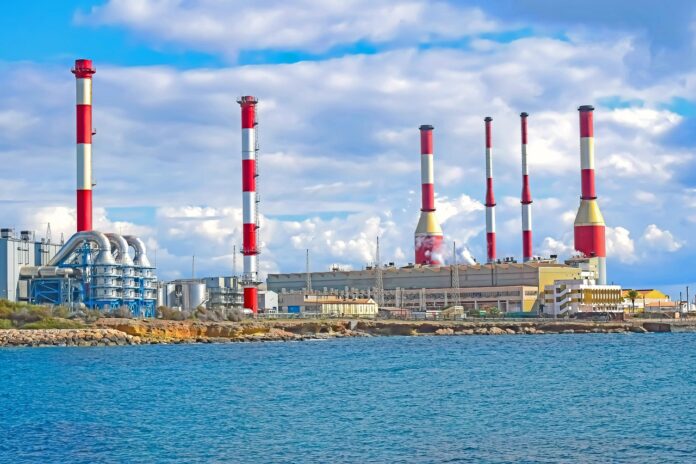
Image from Pixabay
How Heavy Is Constellation Energy’s Debt Now?
Constellation’s debt equals 25.3% of its market value, against 20.0% for the S&P 500 treated as a single company. On that measure, the gap is mild. The more significant shift emerges when comparing the company against its own past. Debt stood at $9.1 billion at the end of June 2024 and had edged down a year later. The entire jump came within the last twelve months.
Against that debt, Constellation held $697 million of cash and short-term investments at the end of June 2026. A holder now owns a business carrying a significantly larger debt load than it did a year ago, even though its debt remains only somewhat above the S&P 500’s relative to market value.
Numbers like this test every retirement plan. If your advisor recently retired, it is a good moment for a free second opinion from our partner firm.
Is Constellation Energy Generating Cash Against That Debt?
Not yet, once investment is counted. Constellation’s free cash flow, the cash left after investment, was below zero in each of the last three quarters. That includes a shortfall of $850 million in the quarter ended March 2026. Management continued to buy back stock over those months. Executives stated on the August 6, 2026 call that the company had spent about $2.2 billion on repurchases so far in 2026.
Real evidence exists on the other side of the ledger. Cash from operations reached $4.2 billion over the twelve months to June 2026, up from $456 million a year earlier. Management expects the asset sales the DOJ required for the Calpine acquisition to generate about $5.9 billion in gross proceeds. On the same call, management noted it had signed about 920 megawatts of long-term nuclear deals with investment-grade customers since its prior call. Those contracts run 18.5 years on average.
Constellation Energy Stock Has Fallen Further Than The Index
In the 2025 US tariff shock, the stock fell 47%, against 19% for an S&P 500 fund. During the 2024 unwind of the yen trade, it dropped 24%, against a 7.8% decline for the index fund. The shares have held up better on two occasions: in the 2022 inflation shock they fell 19%, against 21.1% for the index fund. That relative strength was most apparent during the five percent yield shock of summer and fall 2023, when Constellation fell 2.2%, against a 9.5% drop for the index fund.
Even after the decline of the past year, the shares trade at 28.2 times earnings, against 22.9 for the S&P 500. The stock price likely assumes Constellation’s earnings will keep growing. Management raised its full-year 2026 adjusted operating earnings guidance to $11.50 to $12.50 per share on the August call.
A holder should treat the debt as a real risk to size, rather than an alarm. Measured against market value, it sits modestly above the index. At the same time, cash from operations has risen sharply. The risk is worth taking if the cash Constellation generates starts to exceed what it invests, and if the asset sales close as management expects. Free cash flow is the number to watch when Constellation reports on or around November 9, 2026.
Your Advisor Retired? Get A Second Opinion Before You Settle
One number was enough to change how Constellation Energy looks to its holders. When the advisor who built your plan moves on, it is a natural moment to ask whether the plan still fits the life you have now. Glenn Caldicott, CIO of our Boston-based partner firm Empirical Asset Management, an SEC-registered investment adviser, offers a free review of your holdings, fees and income plan.
Source: www.trefis.com — article syndicated from the publisher’s feed; all rights remain with the original publisher.

