
Elon Musk just named the real bottleneck choking AI expansion, and one fuel cell stock surged 7% before its earnings report while two rivals barely stirred. The split inside the sector reveals exactly which company sits closest to where the…
Power has become the scarcest input in the AI expansion, and money in the fuel cell group is flowing to the supplier most directly wired into data center demand. Bloom Energy (NYSE:BE) stock is at $237.27, up 7% in morning trading, a move that shows buyers lining up for proof of that demand before the company reports its third-quarter 2026 results.
Meanwhile, FuelCell Energy (NASDAQ:FCEL) stock is at $12.60, up 2%, a gain that trails the advance in Bloom Energy stock by a wide margin. Plug Power (NASDAQ:PLUG) stock trades at $1.40, down 0.4%, a slip that runs against the gains elsewhere in the group. This split suggests that buyers are sorting the fuel cell group by how directly each company sells power into AI data centers.
Hydrogen-linked stocks as a group are beating the benchmark, though by a far smaller spread than Bloom Energy stock alone. The Global X Hydrogen ETF (NASDAQ:HYDR) is at $37.77, up 2%, with Bloom Energy, FuelCell and Plug Power among its holdings. For a broad-market comparison, the SPDR S&P 500 ETF Trust (NYSEARCA:SPY) is at $772.61, up 0.46%.
Musk Puts Power at the Center of the AI Race
SpaceX (NASDAQ:SPCX | SPCX Price Prediction) founder Elon Musk framed the issue simply on the company’s earnings call after the prior session’s close: “As I think people are starting to realize, the constraint on deployment of superintelligence is more in power and cooling and infrastructure than it is in chips.” He described power, cooling and electrical equipment as “somewhat of a limiting factor” for SpaceX’s compute expansion. Musk added that the company plans to “aim for an incremental 20 gigawatts of power cooling infrastructure next year” so power doesn’t constrain its build-out.
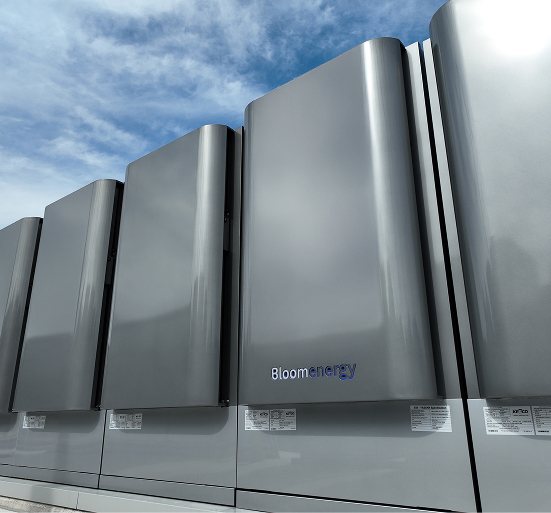
Bloom Energy sells fuel cell systems that generate electricity on site at data centers, so Musk’s comment speaks directly to its market. The company’s solid oxide Energy Servers run on natural gas, biogas or hydrogen, and all major U.S. hyperscalers, along with neoclouds, AI labs and colocation operators, have validated its power solutions (we covered seven suppliers wired into this same data center expansion, from power to cooling, in a free report you can grab here).
Why FuelCell and Plug Power Trail Bloom’s Rally
FuelCell builds utility-scale fuel cell platforms that earn revenue as modules are ordered, which ties its results to the timing of large project awards. Carbonate systems from FuelCell can run behind the meter or inside microgrids without combustion, keeping the company in the data center conversation.
Plug Power’s business is weighted toward hydrogen fuel and material-handling equipment, a separate market from stationary power for computing loads. GenDrive fuel cell systems from Plug Power run material-handling vehicles across warehouse sites, a steady segment that sits apart from data center demand.
Upside for Bloom Energy is clearest if data center orders keep converting into shipments from its U.S. factories. Rallies into an earnings release leave less room for error, and any sign of delayed customer projects or slower conversion could test the momentum in Bloom Energy shares.
Bloom Energy’s Q3 Report Sets Up the Next Move
Bloom Energy’s third-quarter report, expected October 22 after the close, will show whether data center demand is turning into revenue. Management’s commentary on order timing and manufacturing capacity could matter as much as the headline revenue and earnings numbers.
FuelCell’s open variable is the pace of data center module orders, which drives its revenue. Plug Power depends on its hydrogen and material-handling business, outside the AI power story lifting Bloom Energy shares. Investors should size their positions carefully, given Bloom Energy stock’s run-up into earnings.
Contact [email protected] for any questions or corrections.
Source: 247wallst.com — article syndicated from the publisher’s feed; all rights remain with the original publisher.

