
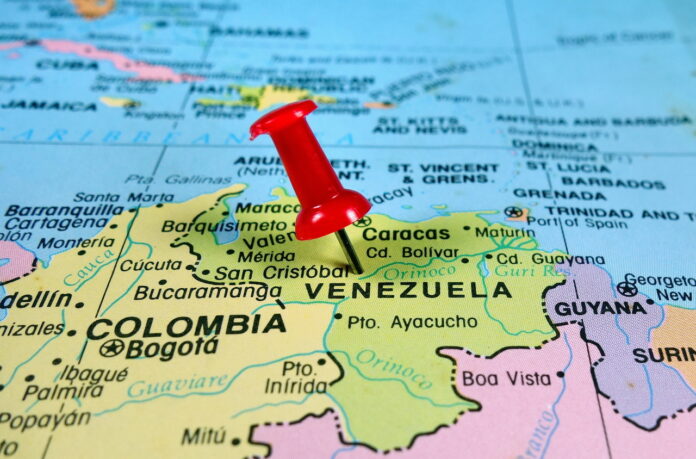
Chevron (CVX +0.60%) is preparing to invest more than $7 billion in Venezuela over the next five years, expanding its presence in a country with some of the world’s largest oil reserves. In fact, the company recently secured improved commercial and legal terms for its Venezuelan joint ventures, along with additional drilling acreage in the country’s oil-rich Orinoco Belt. But the number you should watch isn’t the $7 billion investment. It’s 600,000 barrels per day. That’s Chevron’s production target for Venezuela, representing more than double its 2026 output.
Image source: Getty Images.
Why production growth is the key
Chevron’s three Venezuelan joint ventures produced about 280,000 barrels of oil per day in the second quarter of 2026, up 15% from the previous six months. So reaching 600,000 barrels per day would add roughly 320,000 barrels of daily production.
At an illustrative oil price of $70 per barrel, that additional output would represent approximately $8.2 billion in annual gross oil sales before accounting for operating costs, government payments, and Chevron’s ownership stakes in the joint ventures. That’s not trivial.
Chevron also expects total production costs to remain below $20 per barrel, potentially leaving substantial room for profits if oil prices remain favorable. Of course, Venezuela carries significant political and regulatory risks. Years of underinvestment have also left much of the country’s oil infrastructure in need of repair. That can’t be ignored.
CVX – Chevron
$225.71+$1.34 (+0.60%)
NYSE · As of 4:00 PM ET 10/20/26
A strategic advantage
Chevron has operated in Venezuela for more than a century and already has producing assets, infrastructure, and established partnerships. That said, the company’s investment case extends well beyond Venezuela, with major operations in the United States and other international markets.
On a global scale, Chevron already produces more than 4 million barrels of oil equivalent per day. The additional 320,000 barrels per day targeted in Venezuela would represent roughly 8% of that total, although Chevron’s actual share would be smaller because it doesn’t fully own the joint ventures. So while Venezuela isn’t likely to make or break Chevron, it could still become a meaningful source of additional cash flow, particularly if production costs remain below $20 per barrel. And that does make Venezuela relevant.
Jeff Siegel has no position in any of the stocks mentioned. The Motley Fool has positions in and recommends Chevron. The Motley Fool has a disclosure policy.
Source: www.fool.com — article syndicated from the publisher’s feed; all rights remain with the original publisher.

