
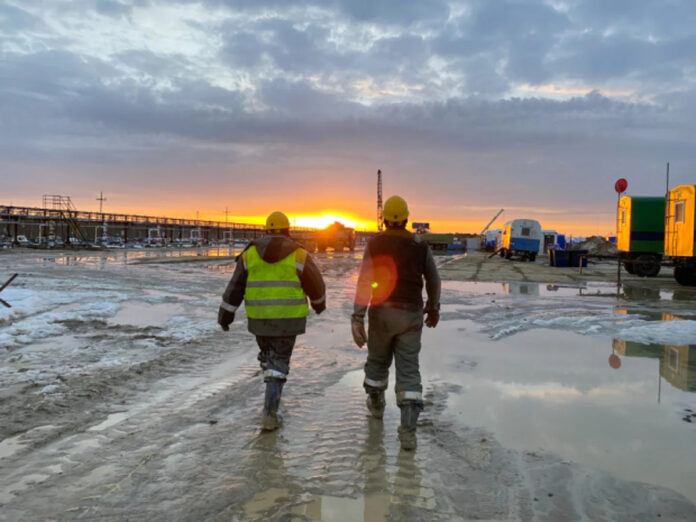
TechnipFMC FTI has strengthened its relationship with BP Exploration & Production Inc., a subsidiary of BP p.l.c. BP, through a new agreement focused on advanced subsea equipment for offshore oil developments in the Gulf of America. Both companies signed a memorandum of understanding (MoU) recently, establishing a framework for cooperation on 20,000-psi (20K) subsea tree systems for BP’s Paleogene projects. The agreement could create additional opportunities for TechnipFMC as energy companies advance technically challenging deepwater developments.
The MoU focuses on identifying early project opportunities and developing technologies that could improve execution schedules and project delivery. Although the agreement does not guarantee new equipment orders, it strengthens the foundation for potential future business between the two companies.
TechnipFMC and BP Focus on Advanced Subsea Technology
The agreement centers on subsea tree systems designed to operate at pressures of up to 20,000 pounds per square inch. These systems are critical components of offshore oil and gas wells, helping regulate production and control the flow of hydrocarbons from the reservoir.
Developments in the Paleogene geological formation present substantial technical challenges because of the demanding conditions associated with deepwater production. Equipment capable of operating under high pressure is therefore important to developing these resources.
Under the MoU, TechnipFMC and BP will explore opportunities to expand the application of standardized 20K subsea solutions. Standardization can help reduce the need for project-specific engineering, streamline equipment manufacturing and improve coordination between development stages.
For TechnipFMC, this approach could support more repeatable project execution and strengthen its position as an important technology supplier to offshore energy operators. The company aims to combine its subsea engineering capabilities with established equipment designs to improve delivery predictability.
Existing BP Projects Provide a Foundation for Growth
The latest agreement builds on TechnipFMC’s existing work with BP on high-pressure subsea developments. In October 2024, TechnipFMC received an integrated Engineering, Procurement, Construction and Installation (iEPCI) contract for BP’s Kaskida development in the Gulf of America. The project included subsea production systems, standardized 20K subsea trees and manifolds, as well as subsea umbilicals, risers and flowlines.
The relationship expanded in January 2026, when TechnipFMC secured another iEPCI contract for BP’s Tiber development. The award was valued at $600-$800 million for TechnipFMC and leveraged engineering and equipment already in progress for Kaskida. This approach illustrates how reusing established designs and project knowledge can support more efficient execution across developments within the same geological region.
These existing projects provide a commercial foundation for the companies’ latest cooperation. If additional developments move forward, TechnipFMC could have opportunities to apply its established technology and execution capabilities to further equipment requirements.
However, investors should distinguish the new MoU from the previously awarded contracts. The latest announcement does not disclose a contract value, a minimum order volume or a delivery schedule. Any incremental revenues will depend on subsequent commercial awards and project decisions.
Standardization Could Improve Project Execution
Offshore oil developments often involve complex engineering requirements, specialized equipment and lengthy installation schedules. Delays or changes during execution can affect project economics, making coordination between operators and suppliers particularly important.
TechnipFMC’s strategy emphasizes the use of standardized equipment and repeatable project delivery methods. By identifying technical requirements and potential opportunities early, FTI and BP may be better positioned to coordinate engineering work and equipment planning.
Doug Pferdehirt, chair and chief executive officer of TechnipFMC, said the MoU supports its efforts to advance standardized 20K solutions. Pferdehirt highlighted the potential benefits of combining established technologies with systematic project delivery to improve predictability and performance.
For TechnipFMC, greater standardization could also help it build on the engineering work completed for earlier projects. Reusing proven designs may reduce duplication and support more consistent execution, although the actual benefits will depend on project requirements and implementation.
What Should Investors Watch in FTI Stock?
The agreement highlights TechnipFMC’s opportunity to participate in future deepwater developments through its subsea technology portfolio. Its existing work on Kaskida and Tiber gives the company experience with BP’s high-pressure development requirements, while the new framework creates a basis for exploring additional opportunities.
Investors should monitor whether the MoU leads to firm equipment orders, additional project awards or further technology-development commitments. The value and timing of any resulting contracts will be important in assessing the agreement’s financial contribution.
It is also important to consider the broader operating environment. Deepwater projects require substantial capital investment and their progress can depend on commodity-price expectations, development economics and operators’ spending priorities. Changes in these factors could influence the timing of future awards.
Overall, TechnipFMC’s agreement with BP represents a strategic step toward expanding cooperation on standardized high-pressure subsea systems. The existing Kaskida and Tiber projects provide relevant experience, while the MoU offers potential for further collaboration. Nevertheless, investors should wait for additional contract announcements before assigning a specific revenue or earnings contribution to the new agreement.
FTI’s Zacks Rank & Other Key Picks
Currently, FTI has a Zacks Rank #2 (Buy), while BP sports a Zacks Rank #1 (Strong Buy). BP is a global energy company engaged in oil and natural gas production, refining and marketing, with operations spanning the energy value chain.
Investors interested in the energy sector might consider other top-ranked stocks, such as Marathon Petroleum MPC and Delek US Holdings DK, each sporting a Zacks Rank #1 at present. You can see the complete list of today’s Zacks #1 Rank stocks here.
Marathon Petroleum is valued at $138.68 billion. The company is a leading U.S. independent refiner, marketer and transporter of petroleum products, with a strong refining footprint and an extensive midstream business. Marathon Petroleum benefits from its integrated operations, strategic refining assets and diversified earnings streams across the energy value chain.
Delek US Holdings is valued at $4.75 billion. It is a diversified downstream energy company engaged in petroleum refining, renewable fuels, asphalt production and logistics operations. Delek US Holdings operates multiple refineries in the United States and is committed to delivering safe, reliable energy while investing in cleaner energy initiatives.
Want the latest recommendations from Zacks Investment Research? Today, you can download 7 Best Stocks for the Next 30 Days. <a href="https://www.zacks.com/registration/pfp/?ALERT=RPT_7BEST_YHOSYND&ADID=SYND_YAHOO_7BEST_ANALYSTBLOG_254_3013004&cid=CS-YAHOO-FT-analyst_blog|company_news_energy_sector-3013004&t=BP" rel="nofollow noopener" t
Source: finance.yahoo.com — article syndicated from the publisher’s feed; all rights remain with the original publisher.

