
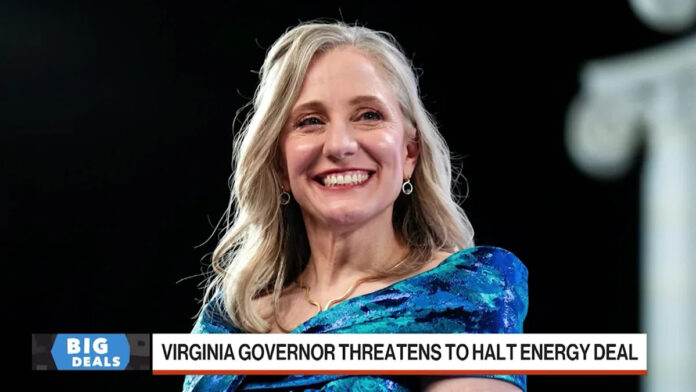
00:00 Speaker A
Now we are less than two weeks away from the US midterms and data centers are certainly on the ballot. For example, the governor of Virginia is threatening to pull the plug on the $76 billion energy deal between Next Era and Dominion. That is unless Next Era Energy promises to freeze power bills at their current rate for six years. It’s the latest example of public and political push back to the AI AI buildout weighing on deals. This morning, BlackRock CEO Larry Fink joined Bloomberg and he was asked if he thought political gridlock would start to inhibit the AI buildout. Here’s what he had to say.
00:46 Larry Fink
I think some of the politicians are correct in asserting that if we’re going to be about building data centers, you got to secure your own power. You cannot put any tax on a community. I agree with that. You have to make sure that the you have the newest technology for the data centers that you’re not using all the community water, that you have a closed, you know, system of water. So a lot of this is just misinformation. Um, but we have to address this and and I think if we’re addressing this, we’ll probably have less of a gridlock on this issue.
01:19 Speaker A
Mark Chediak covers power grids for Bloomberg, and he’s been following the Next Era Dominion deal and joins us from San Francisco. Um, Mark, how under threat are both current and upcoming deals from the political pushback that we’ve been getting?
01:43 Mark Chediak
Well, the particular Next Era Dominion deal is, uh, it is actually facing quite a bit of resistance from the Virginia governor, as you mentioned, as well as a lot of politicians in the state and the staff of regulators, uh, who are reviewing the merger. Uh, the big issue in Virginia is affordability. Uh, rates there have been going up pretty consistently. Uh, the governor campaigned on the idea of bringing rates down and she is now trying to meet those promises. So, what she’s asking of these two utilities is a pretty big ask.
02:30 Mark Chediak
A six-year rate freeze is pretty fairly unprecedented. And uh as well as she wants uh the company to triple a bill credit that uh Dominion and Next area have offered. They have offered a $10 a monthly bill credit and she wants that to go up to $30 a month. and just to put that in perspective, the average bill, the average utility bill in Virginia is about $150. So that would be about a 20% reduction in a customer’s bill and freezing those rates for six years.
03:15 Speaker A
If we did get something of those lines, Mark, I wonder what that does to the whole ecosystem. Again to this question of deal making has been quite robust in energy, in the AI data center ecosystem. Does that do something to put itself a freeze, a chill on activity?
03:36 Mark Chediak
I don’t think necessarily so. I mean, I think in this case, you have two large utilities looking to merge. It could, it could, uh, quiet utility mergers because of concerns about, uh, demands that, uh, regulators and governors are going to place on those utilities in terms of how much they can charge customers. But we have seen, still seen a lot of activity outside the regulated utility space, in the power space, a lot of M&A activity as these companies seek to get bigger and uh, enhance their balance sheet so they can build these power assets they’re needed for these data centers.
Source: finance.yahoo.com — article syndicated from the publisher’s feed; all rights remain with the original publisher.

