
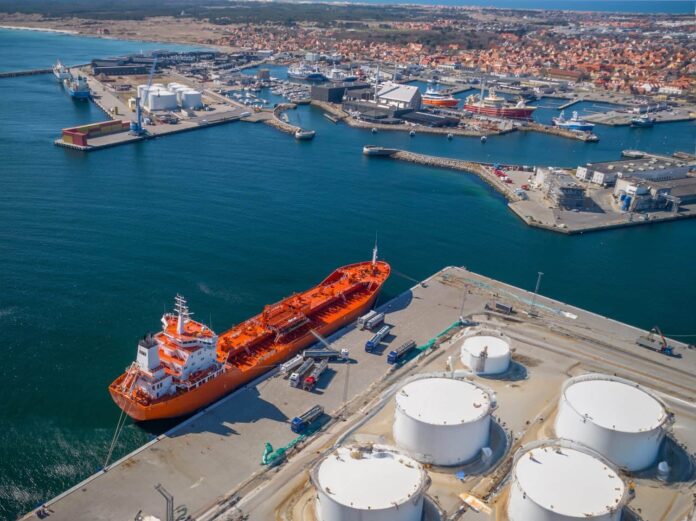
Energy Secretary Chris Wright opened the door to more Russian diesel flowing into American ports, and refiner stocks dropped hard the same afternoon. Whether those barrels can actually move the needle on diesel prices is a very different question.
Asked on CNBC’s Power Lunch on Tuesday, October 27, 2026, whether more tankers carrying Russian diesel could sail under a U.S. sanctions waiver, Energy Secretary Chris Wright answered: “quite possibly.”
He called the waiver “an incentive” for Moscow to end its war in Ukraine, adding, “It’s trying to put a carrot in front of Russia.” He also set out its limits: “We’ve done a temporary six month suspension of sanctions, not on Russian oil, not on any other Russian products, only on diesel.”
Refiner shares fell the same day. Valero Energy (NYSE:VLO | VLO Price Prediction) fell 9.24% to $387.34, Marathon Petroleum (NYSE:MPC) dropped 7.36% to $435.98, and Phillips 66 (NYSE:PSX) lost 7.03% to $268.53.
Heating oil futures, the U.S. diesel benchmark, slid 2.79% to $4.7752 a gallon. The United States Oil Fund (NYSEARCA:USO), which tracks crude, slipped 1.41% to $163.88.
Wright’s answer was one of several pressures on these stocks that day. Refiners just earned record profits on expensive diesel, and the White House wants diesel cheaper before the midterms on Tuesday, November 3.
How Much Russian Diesel Is Moving
After a call with Vladimir Putin on Friday, October 9, President Trump announced 800,000 metric tons of Russian diesel exports in October and November. He promised 3 million tons more “within a short period of time.”
A Treasury general license, which is a written exemption, shields Russian diesel loaded as of October 9 from U.S. sanctions until April 2027. It is the first easing to run past the standard 30-day window since February 2022.
The tanker Talisman is due on the U.S. East Coast on Monday, November 9, and it is the only named U.S.-bound tanker. Russian Deputy Prime Minister Alexander Novak said on October 23 that three tankers were already under way.
Russia had banned diesel exports since July, and its diesel output has fallen about 30%, so Moscow has yet to show it can deliver on a steady schedule.
Why These Barrels Barely Matter
The first batch works out to about 75,000 barrels per day over a month and the second to about 124,000. Global diesel demand is about 28 million barrels per day.
Volumes that small are unlikely to change what a truck driver or a heating oil customer pays. The national diesel average was $6.3521 on October 27. That was below $6.4709 a month earlier and the $6.5276 record of September 22, but far above $3.6619 a year earlier.
Fuel prices have climbed since the U.S. and Israel attacked Iran on February 28. Refiners still pay attention, because imported diesel that lands on the East Coast competes with domestic barrels and can trim their margins a little.
Refiners Shrug While Allies Object
On October 22, Valero operations chief Gary Simmons said lifting sanctions brings “a change of trade flows, not really incremental supply.” Valero benefits if investors accept that view, but the barrel counts above support it.
Several Republican senators joined Democrats in calling the deal “a gift to our adversary and a betrayal of our Allies.” Ukrainian President Volodymyr Zelenskyy called it “a weak decision, unfortunately, a weak decision by strong partners.”
What Could Swing Refiner Stocks Before Earnings
In the bull case, margins come first: Valero earned a third-quarter refining margin of $39.24 a barrel, up from $13.14 a year earlier, and Russian shipments this small barely affect that.
The bear case rests on valuation and politics, because Valero is up 141.52% in 2026, and a White House pushing for cheaper diesel before an election can keep putting out headlines that hit these stocks.
Marathon looks better positioned than its peers to absorb political pressure. Its 64% stake in its pipeline affiliate adds steadier income, and as of its second-quarter report, it still had $6.1 billion left on its share buyback authorization.
Phillips 66 reports on October 28, Marathon on November 3, and Talisman on November 9. If heating oil futures stay below $4.7752 through that stretch, the bear case is gaining ground.
Contact [email protected] for any questions or corrections.
Source: 247wallst.com — article syndicated from the publisher’s feed; all rights remain with the original publisher.

